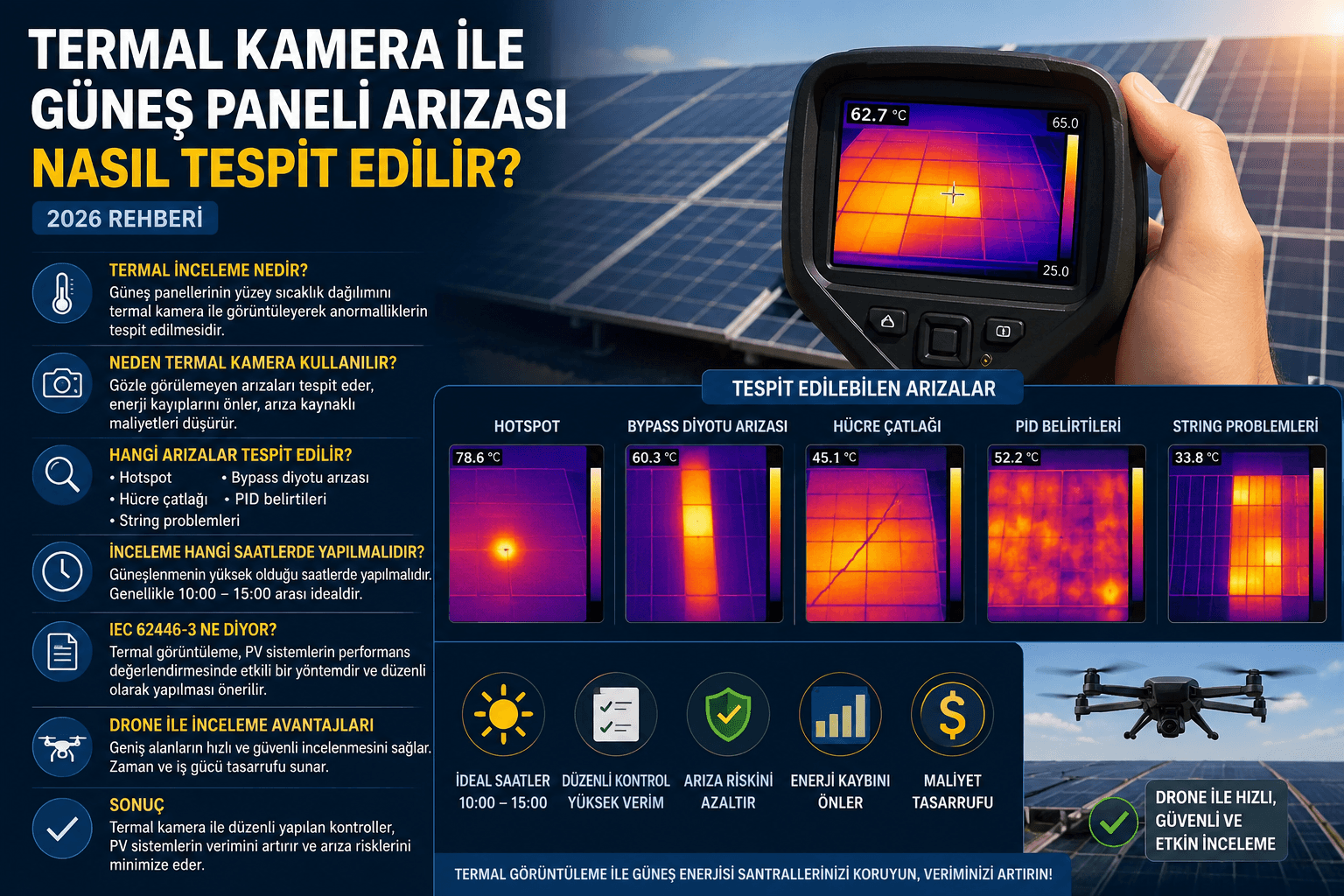
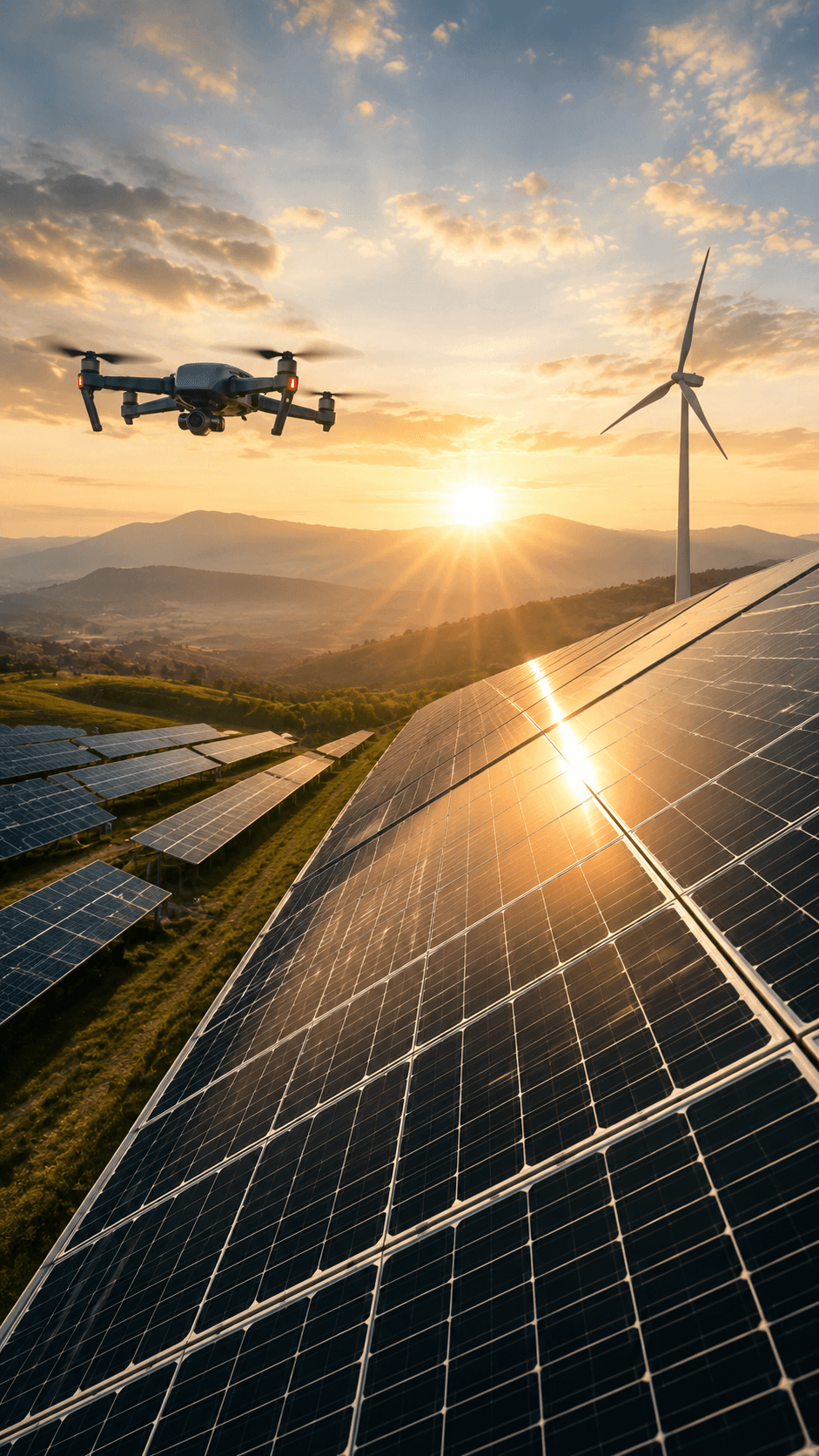
Why Thermal Inspection Matters So Much for Solar Panels
Thermal imaging surfaces faults at solar power plants long before they'd ever be visible to the naked eye. Here's why thermal inspection is an investment-protection strategy, not just a maintenance routine.
Faults You Can't See
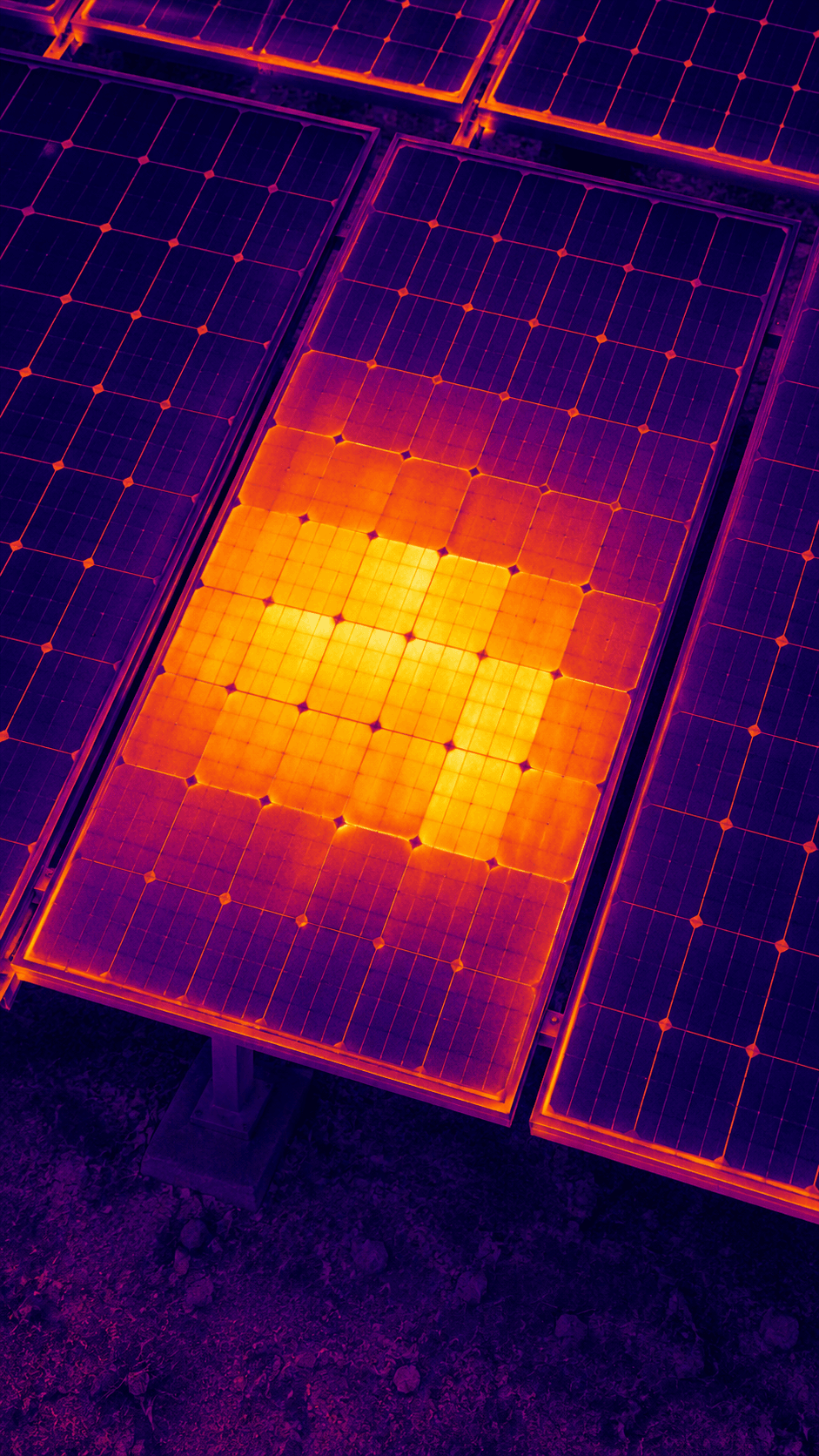
Most issues — hotspots, microcracks, PID (potential-induced degradation), and failed bypass diodes — leave no visible trace on the panel surface. A field team could walk the rows all day and still never spot them with the naked eye.
These faults only show up as a clear temperature deviation (ΔT) against a healthy panel on a thermal camera. That makes thermal inspection the primary detection method, not just a complement to a visual walkthrough.
How Early Detection Cuts Costs
A small hotspot left unnoticed grows over time, affects neighboring cells, and can eventually require replacing the entire panel. The same fault caught early is usually resolved with a far cheaper fix.
Every day a fault goes unnoticed also means ongoing production loss from that panel. Early detection cuts both the repair cost and the cumulative energy loss at the same time.
How Often Should You Run a Thermal Inspection?
Most O&M programs recommend at least one comprehensive thermal inspection a year, with an additional pass after severe weather events (hail, storms) or an unexpected drop in production data.
How the Process Works with SunLove X
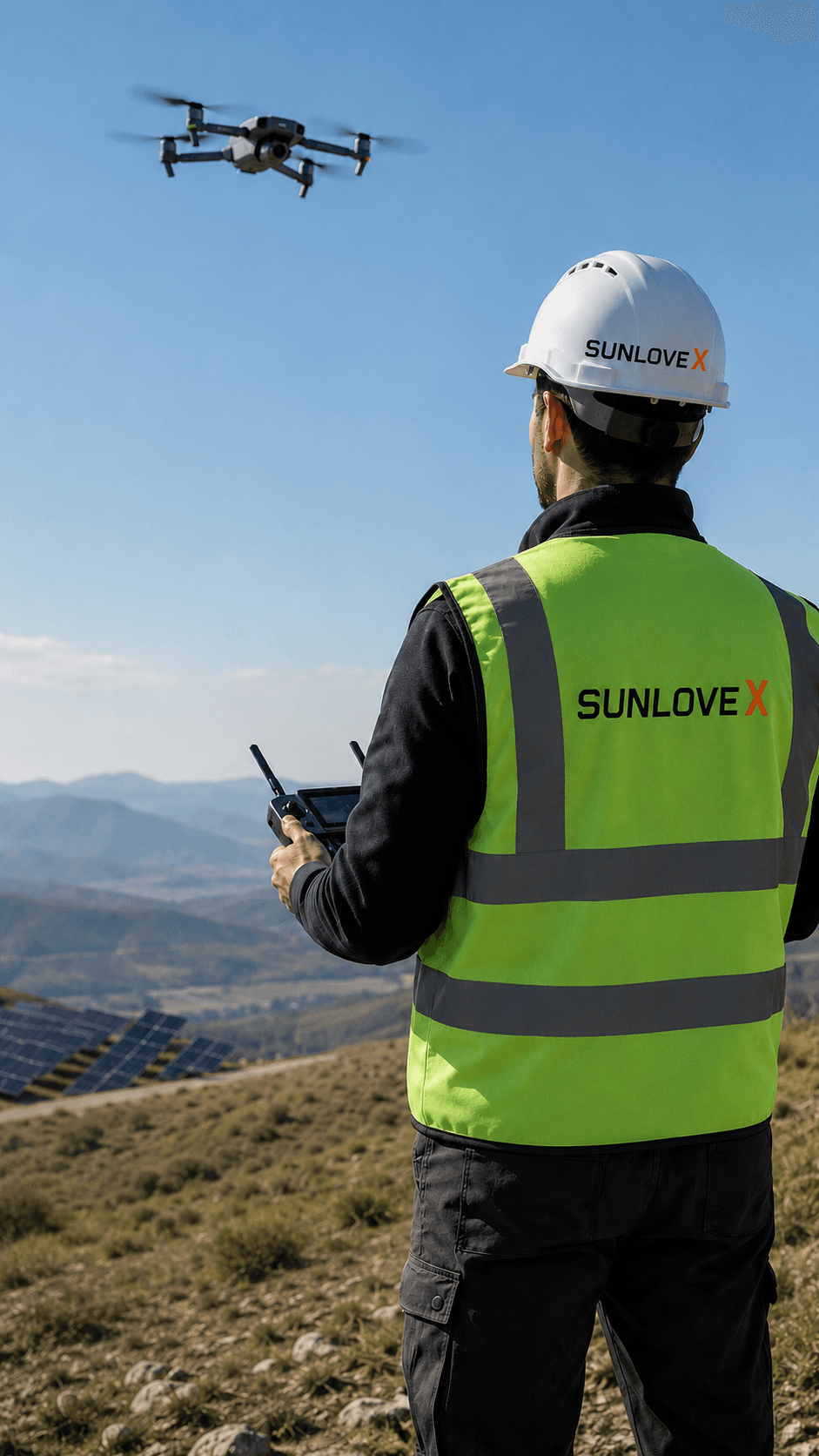
Upload the RGB and thermal imagery your drone collects to SunLove X, and the platform automatically generates orthophotos, calculates ΔT against your reference points, and prioritizes every anomaly into Low, Medium, High, and Critical. The result is a share-ready report compliant with the IEC 62446-3 standard.